
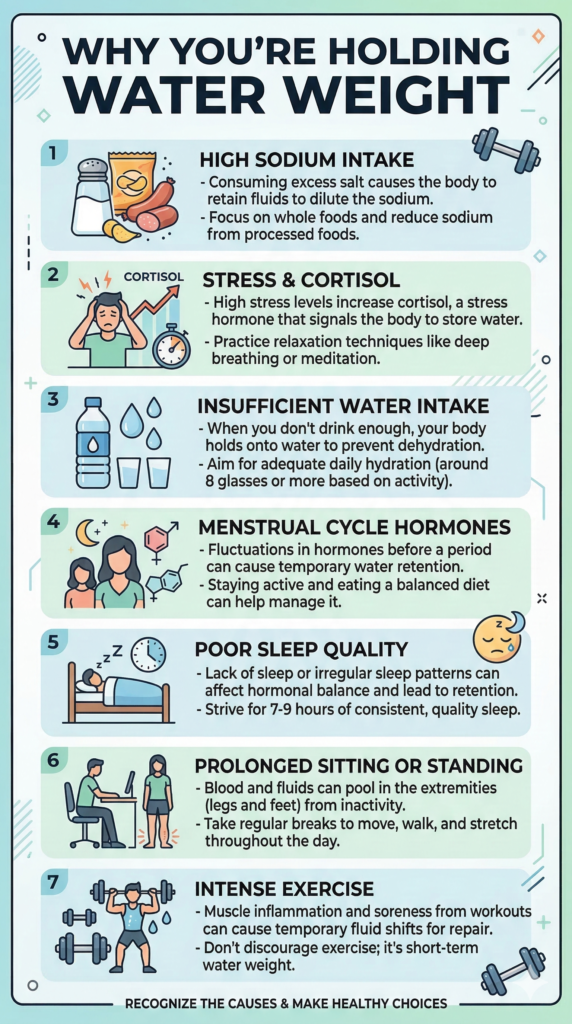
Water retention is one of the most misunderstood changes people experience when they adjust their diet. Many people notice that after eating processed foods they feel bloated, heavier, or puffy. A day or two later, after returning to whole foods or fasting, they begin urinating more frequently and the bloating disappears.
This shift is not random. The human body constantly regulates water levels to maintain balance between electrolytes, energy storage, and hormone signals. When certain nutrients rise or fall, the body temporarily stores or releases water to restore equilibrium.
Understanding this process can help remove confusion about short-term weight fluctuations and explain why clean eating often produces rapid visible changes.
Sodium and Water Retention
One of the primary drivers of water retention is sodium intake. Sodium is an essential electrolyte that helps regulate nerve signaling, muscle contraction, and fluid balance. However, when sodium levels rise too quickly, the body compensates by retaining water in order to dilute the concentration in the bloodstream.
Processed foods are typically the largest contributors to excess sodium. Packaged snacks, frozen meals, sauces, breads, and restaurant foods often contain large quantities of salt because it enhances flavor and extends shelf life.
When someone consumes a high-sodium meal, the body holds additional water inside tissues and the bloodstream. This can lead to temporary swelling or bloating.
The key point is that this extra weight is not body fat. It is simply fluid that the body is holding temporarily until sodium levels normalize.
Carbohydrates and Glycogen Storage
Carbohydrates influence water retention through a different mechanism. When carbohydrates are consumed, the body converts them into glycogen, which is stored in muscles and the liver for future energy.
Glycogen molecules bind to water. For every gram of glycogen stored, approximately three to four grams of water are stored alongside it. This means that when carbohydrate intake increases, water storage also increases.
Athletes often take advantage of this process during carbohydrate loading before endurance events. By increasing glycogen stores, they increase both available energy and water stored in muscle tissue.
However, the opposite also occurs. When glycogen is used for energy during exercise or fasting, the attached water is released and eventually eliminated through the kidneys.
This is why people frequently notice a rapid drop in weight when they shift from processed foods to whole foods or temporarily reduce carbohydrate intake.
Hormonal Control of Fluid Balance
Water balance is also regulated by several hormones that control how much fluid the body keeps or releases.
Antidiuretic hormone signals the kidneys to retain water when the body needs hydration. Aldosterone regulates sodium levels and therefore indirectly controls fluid retention. Insulin influences glycogen storage and sodium handling in the kidneys.
When dietary sodium decreases or glycogen stores begin to drop, hormonal signals shift and the body begins releasing excess fluid.
This change often leads to increased urination and a noticeable reduction in bloating.
The Role of the Kidneys
The kidneys act as the body’s filtration system. They continuously filter blood, removing excess water, electrolytes, and metabolic waste.
When the body determines that extra fluid is no longer needed, the kidneys remove that water from circulation and convert it into urine.
This process explains why someone might feel bloated after eating processed foods but notice frequent urination and reduced bloating after returning to whole foods.
The body is simply restoring its internal balance.
Surprising Foods That Can Cause Water Retention
Some foods that appear healthy can still cause temporary bloating.
Restaurant salads often contain high-sodium dressings, olives, cheese, and processed proteins. Whole grain breads frequently contain hidden sodium and preservatives. Protein bars may contain sugar alcohols that pull water into the digestive tract.
These ingredients can cause bloating even when the meal itself appears healthy.
Foods That Help Reduce Water Retention
Certain foods naturally support fluid balance. Cucumbers contain high water content and help maintain hydration. Asparagus contains asparagine, which can promote urine production. Watermelon provides hydration and potassium that counteracts sodium.
Celery supports kidney function and pineapple contains bromelain, an enzyme associated with reduced inflammation.
Together these foods can support the body’s natural fluid regulation systems.
Final Thoughts
Water retention is a normal biological process designed to maintain balance in the body. Sodium intake, carbohydrate storage, hormones, and kidney function all play roles in determining how much fluid the body holds.
Temporary bloating after certain meals is usually not fat gain but rather the body managing fluid levels.
By focusing on whole foods, staying hydrated, and maintaining consistent nutrition habits, the body naturally regulates fluid balance and reduces unnecessary water retention.
Discover more from wellnesswaynews.com
Subscribe to get the latest posts sent to your email.