Every week in the fitness world, someone declares they’ve found the ultimate exercise. The one movement that’s superior to all others for building your chest, your back, your legs. And to be fair, they might have a point. Some exercises do have biomechanical advantages. Some movements do recruit muscle fibers more effectively.
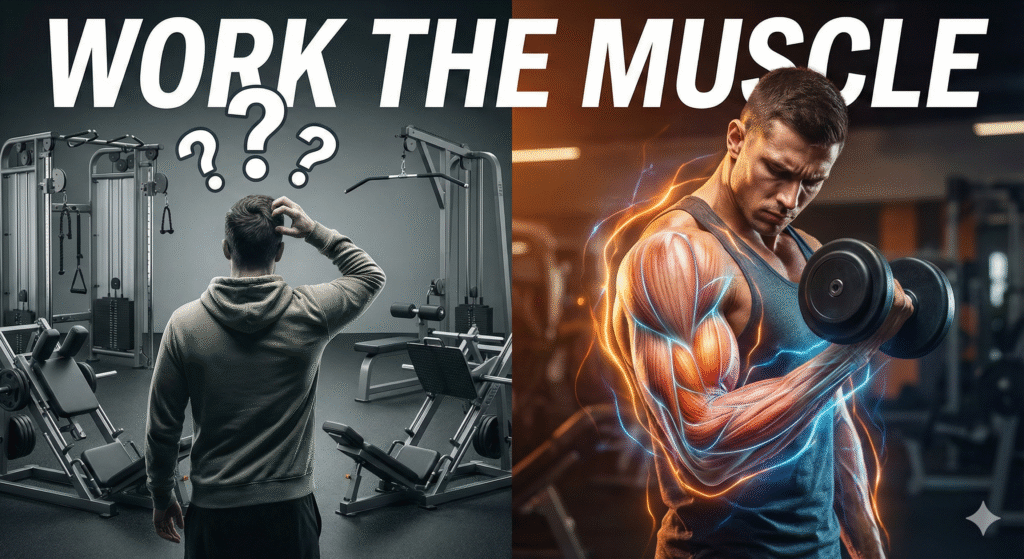
But here’s the question nobody seems to ask: Does any of that matter if you don’t know how to work the muscle properly?
The Myth of the “Better” Exercise
Is one exercise or movement really better than another for working a specific muscle? Possibly. In a vacuum, with perfect form, optimal mobility, and ideal body mechanics—sure, maybe Exercise A is technically superior to Exercise B.
But we don’t train in a vacuum.
We train with our individual bodies, our unique movement patterns, our personal injury histories, and our varying levels of experience. And here’s the uncomfortable truth: If you don’t know how to work the muscle, switching to a different exercise won’t change your results. It might actually make them worse.
Think about it. How many times have you abandoned an exercise you were comfortable with because someone told you there was a “better” option? You switched movements, felt awkward, couldn’t feel the muscle working, and wondered why you weren’t seeing the same results.
The problem wasn’t the exercise. The problem was that you didn’t understand how to work the muscle itself.
The Evolution of Fitness “Rules”
Here’s another truth that proves my point: fitness advice changes constantly.
Back in the day, the “experts” used to tell you that you can’t bench press every day. Your body needs rest between sessions. You’ll overtrain. You’ll destroy your central nervous system. You’ll get injured.
But nowadays? You see everybody in the world doing LEGS every day. Daily leg training programs are everywhere. High-frequency training is now celebrated instead of demonized. And people are making incredible gains with approaches that would have been called “impossible” just a decade ago.
So what’s the difference?
The difference isn’t that the human body changed. The difference is that people figured out how to make it work for them. They learned proper recovery strategies. They understood training volume. They adapted their approach to their individual needs.
What Works for YOU
Here’s the bottom line: What works for YOU is what matters.
Of course, there are principles. Of course, biomechanics exist. Of course, technique matters. But if something is working for you—if you’ve built comfort and confidence with a movement, if you understand how to work the muscle, if you’re seeing consistent progress—that’s YOUR answer.
Yes, if you find someone that’s into the same thing, with similar goals, similar body structure, similar training experience—maybe what works for them will work for you too. You can learn. You can experiment. You can evolve.
But never forget: It’s ALL about YOU.
Your body is unique. Your biomechanics are individual. Your recovery capacity is personal. Your goals are your own.
Stop chasing the “perfect” exercise that some influencer swears by. Stop abandoning what’s working because someone on the internet said there’s a better way. Stop second-guessing yourself when you’re making progress.
Master what you know. Get so good at working your muscles that the specific exercise becomes almost secondary. Build that mind-muscle connection until you can make any movement effective.
That’s the real secret. That’s Thursday’s Thoughts.
Discover more from wellnesswaynews.com
Subscribe to get the latest posts sent to your email.