
Resilience isn’t mental toughness. It’s nervous system regulation.
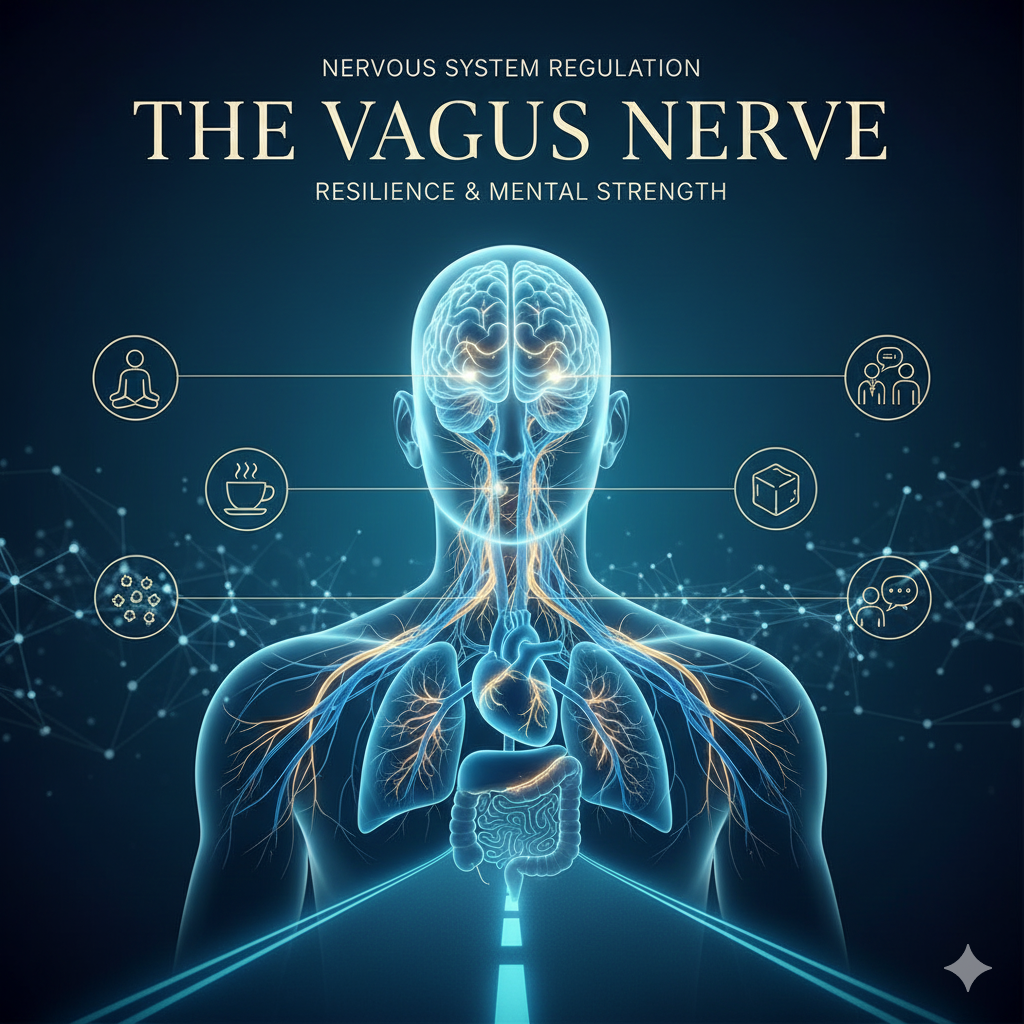
The vagus nerve, the longest cranial nerve in the body, is the highway between your brain and your organs. It governs heart rate, digestion, immune response, and emotional regulation. High vagal tone—the strength and efficiency of this nerve—correlates directly with stress resilience, emotional control, and mental clarity.
People with high vagal tone recover faster from stress. Their heart rate variability (HRV) is higher, indicating a flexible nervous system that can shift between sympathetic (fight-or-flight) and parasympathetic (rest-and-digest) states. Low vagal tone? You’re stuck in chronic stress mode, even when there’s no real threat.
Polyvagal theory, developed by Dr. Stephen Porges, explains that the vagus nerve has two branches: the dorsal (freeze response) and ventral (social engagement). Training the ventral vagus nerve improves your ability to stay calm under pressure, connect with others, and regulate emotions without shutting down.
How do you strengthen vagal tone?
Cold exposure activates the vagus nerve. Cold showers, ice baths, and cold-water face immersion trigger the mammalian dive reflex, slowing heart rate and activating parasympathetic dominance.
Breathwork, especially slow diaphragmatic breathing (6 breaths per minute), stimulates the vagus nerve and increases HRV. Box breathing, coherent breathing, and extended exhales all work.
Humming, chanting, and singing also activate the vagus nerve through vibration in the throat and chest. This is why meditation practices often include vocal toning.
Social connection matters too. Safe, face-to-face interactions activate the ventral vagus and build resilience. Isolation weakens it.
Your nervous system is trainable. Discipline your recovery, and your mind will follow.
Wellness is the way.
Discover more from wellnesswaynews.com
Subscribe to get the latest posts sent to your email.
