
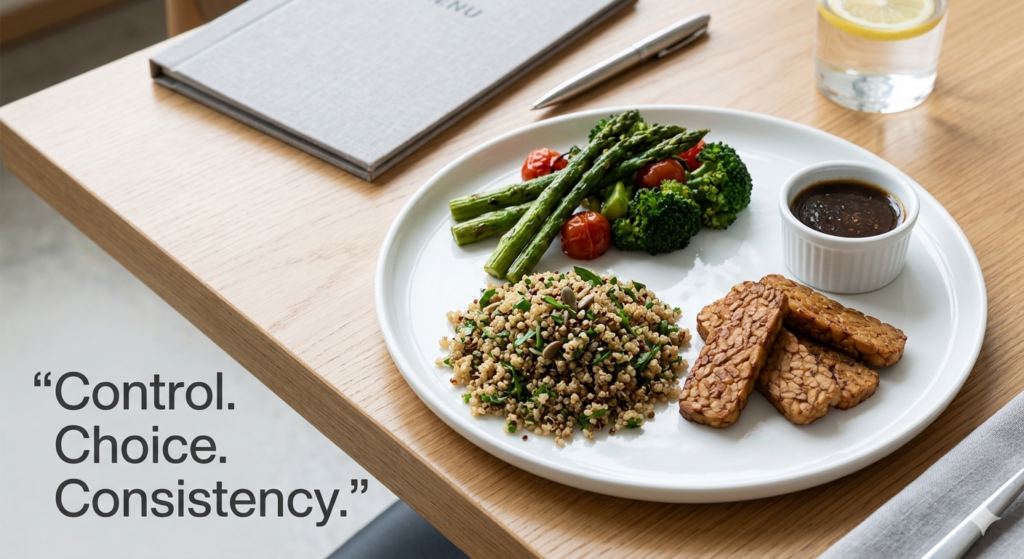
Dining out is a consistent part of modern life, influenced by work demands, travel, and accessibility. While restaurant meals are often associated with higher calorie intake and lower nutritional control, the outcome is not fixed.
It is influenced by decision-making.
Restaurant meals are typically prepared with standardized recipes designed for flavor and consistency. This often includes added oils, sugars, and sauces that increase overall energy density.
However, these elements are not always required.
Consumers have the ability to request modifications that alter the nutritional profile of a meal without removing the experience of dining out. Adjustments such as reducing added oils, limiting sugars, or requesting sauces on the side can significantly impact intake.
Despite this, many individuals do not make these requests.
The barrier is rarely knowledge. It is behavioral. Social discomfort, perceived inconvenience, and habit patterns often prevent individuals from taking control in these situations.
From an operational standpoint, many food service environments are equipped to handle customization. Dietary preferences, restrictions, and modifications have become increasingly common.
This creates a gap between what is possible and what is practiced.
Consistency in health behaviors is not determined by ideal conditions. It is determined by decisions made in variable environments.
Dining out does not remove the ability to make intentional choices. It presents an opportunity to apply them.
Over time, small, consistent adjustments influence larger outcomes.
Control, when applied consistently, becomes a pattern.
And patterns drive results.
Discover more from wellnesswaynews.com
Subscribe to get the latest posts sent to your email.