
The fitness industry loves oversimplifying protein intake. “Just hit your macros,” they say. But the science tells a more nuanced story—and understanding it can accelerate your results.
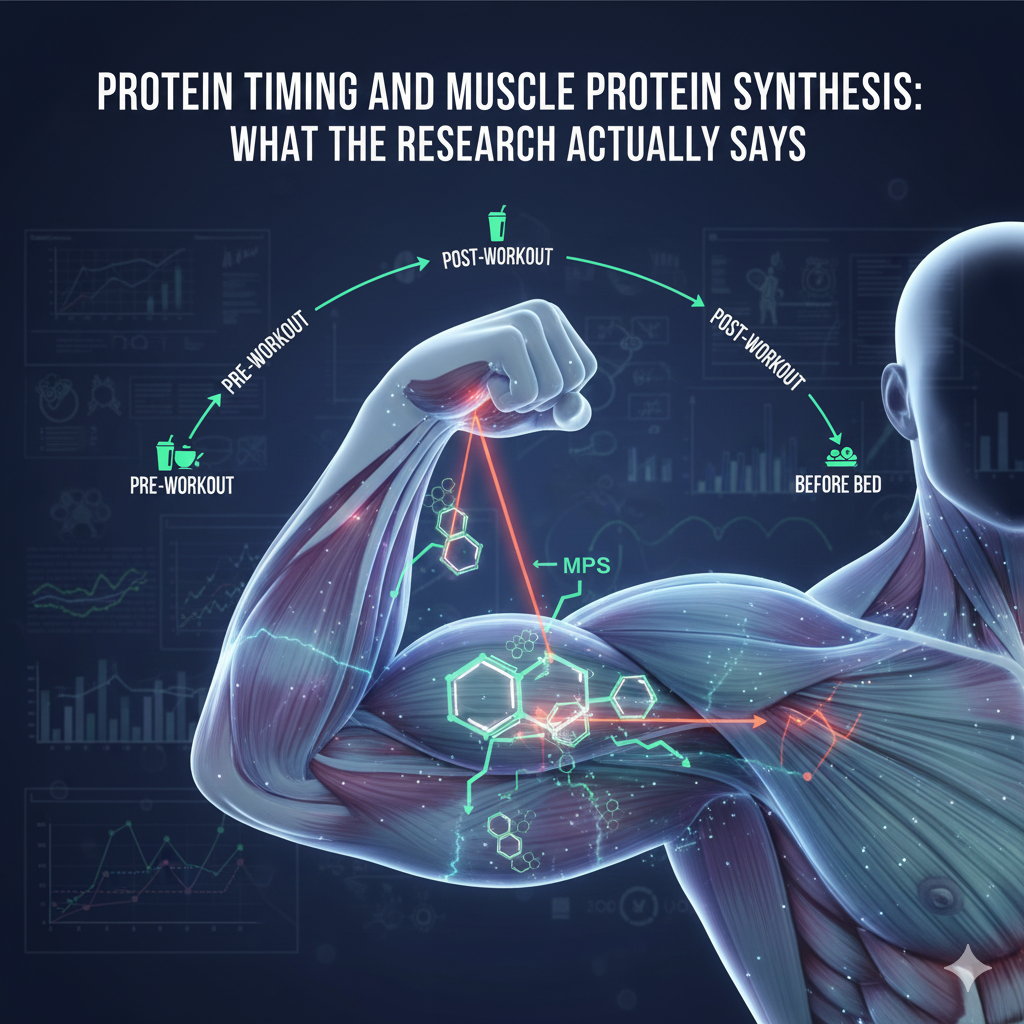
Muscle protein synthesis (MPS) is the process by which your body repairs and builds muscle tissue after training. It’s triggered by mechanical tension (lifting), metabolic stress, and adequate amino acid availability. The key variable most people miss? Timing and distribution.
A study published in the Journal of the International Society of Sports Nutrition found that spreading protein intake evenly across 4-5 meals maximizes MPS compared to front-loading or back-loading intake. Each meal should contain 20-40 grams of high-quality protein, depending on body weight and training intensity.
The “anabolic window” isn’t a myth—but it’s wider than you think. Post-workout protein within 2-3 hours is ideal, but total daily intake and meal frequency matter more than slamming a shake immediately after your last rep.
Leucine, one of the branched-chain amino acids (BCAAs), is the primary trigger for MPS. Animal proteins like chicken, fish, and eggs are leucine-rich, but plant-based athletes can optimize by combining legumes, quinoa, and soy to hit leucine thresholds.
Sleep is also critical. Casein protein before bed provides a slow-release amino acid supply, supporting overnight recovery and preventing muscle breakdown during fasted states.
The bottom line? Protein isn’t just fuel. It’s a signal. And how you deliver that signal determines whether you’re building, maintaining, or wasting muscle.
Discipline your nutrition. Build your body.
Wellness is the way.
Discover more from wellnesswaynews.com
Subscribe to get the latest posts sent to your email.